Stone brings a weight and permanence that is hard to fake, but only when it is set properly. We build and repair stone walls, steps, columns and veneer, working with natural stone and manufactured stone systems.
Utah has a long history of building with stone. The Utah Geological Survey's guide to the building stones of downtown Salt Lake City documents a range of stones used in the city's buildings, some quarried locally and some brought in from elsewhere. Residential stonework draws on a similarly wide range, and the best choice depends on the project rather than on one "standard" Utah stone.
The main factors to weigh are:
It's worth confirming a specific stone's suitability and current availability before a design is settled, rather than starting from a photo and working backward.
✓
Durability and absorption
In a climate with freezing winters, how readily a stone takes up water matters, especially for steps, wall caps and anything near the ground.
✓
Appearance
Color, texture and the way the stone is shaped, from rough fieldstone to squared, cut stone, set the character of the finished work.
✓
Shape and thickness
Irregular stone suits rustic walls; cut stone suits crisp, formal lines. Thickness and weight affect how the stone must be supported.
✓
Availability and matching
If new work sits beside existing stone, the ability to source something compatible may narrow the choice.
Stone Walls, Columns, Steps and Facades
Stone masonry covers a range of projects, each with its own practical decisions:
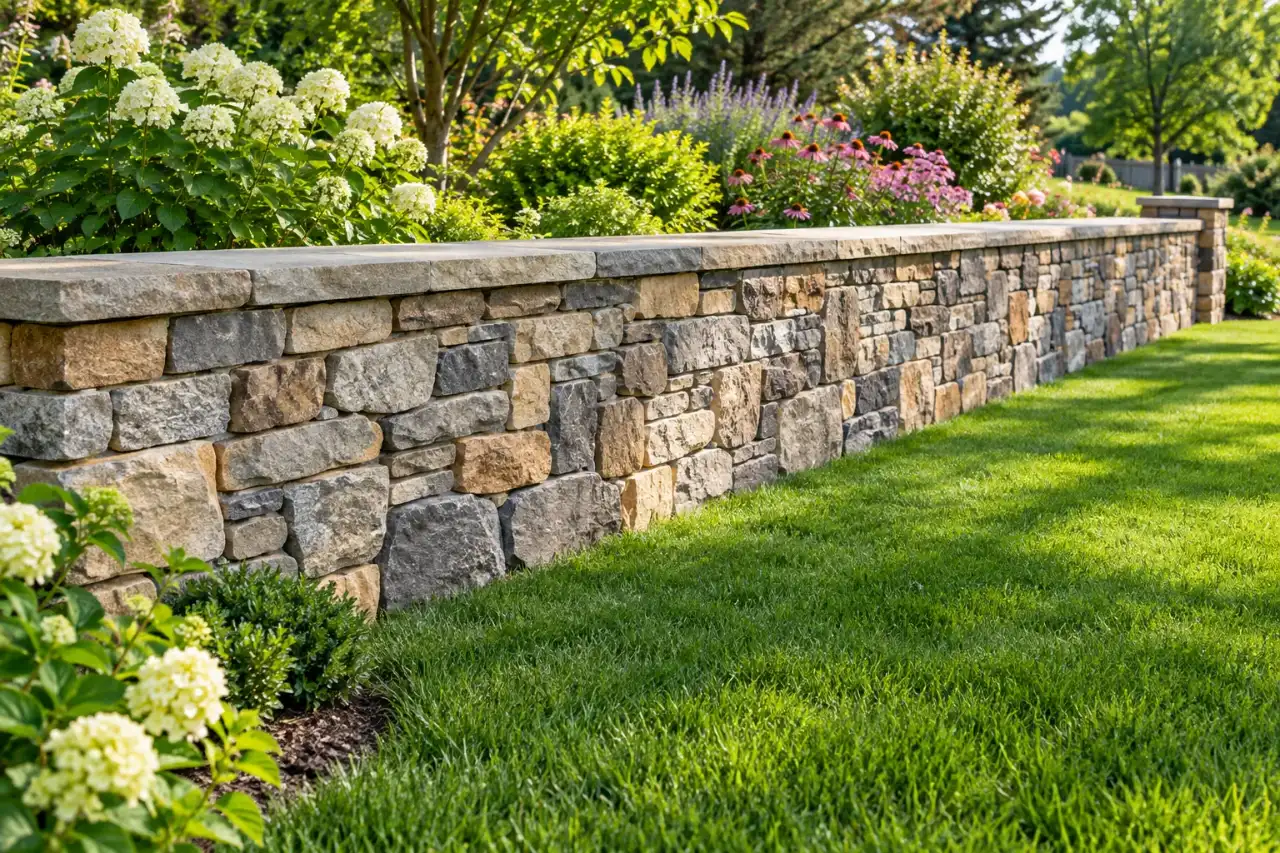
Freestanding stone walls, such as garden, boundary and privacy walls. Height, thickness and the cap that sheds water off the top all shape how the wall looks and how it weathers.
Columns and pillars, at gates, driveways and porches. These are often built around a core, and how they're anchored and capped matters as much as the stone on the face.
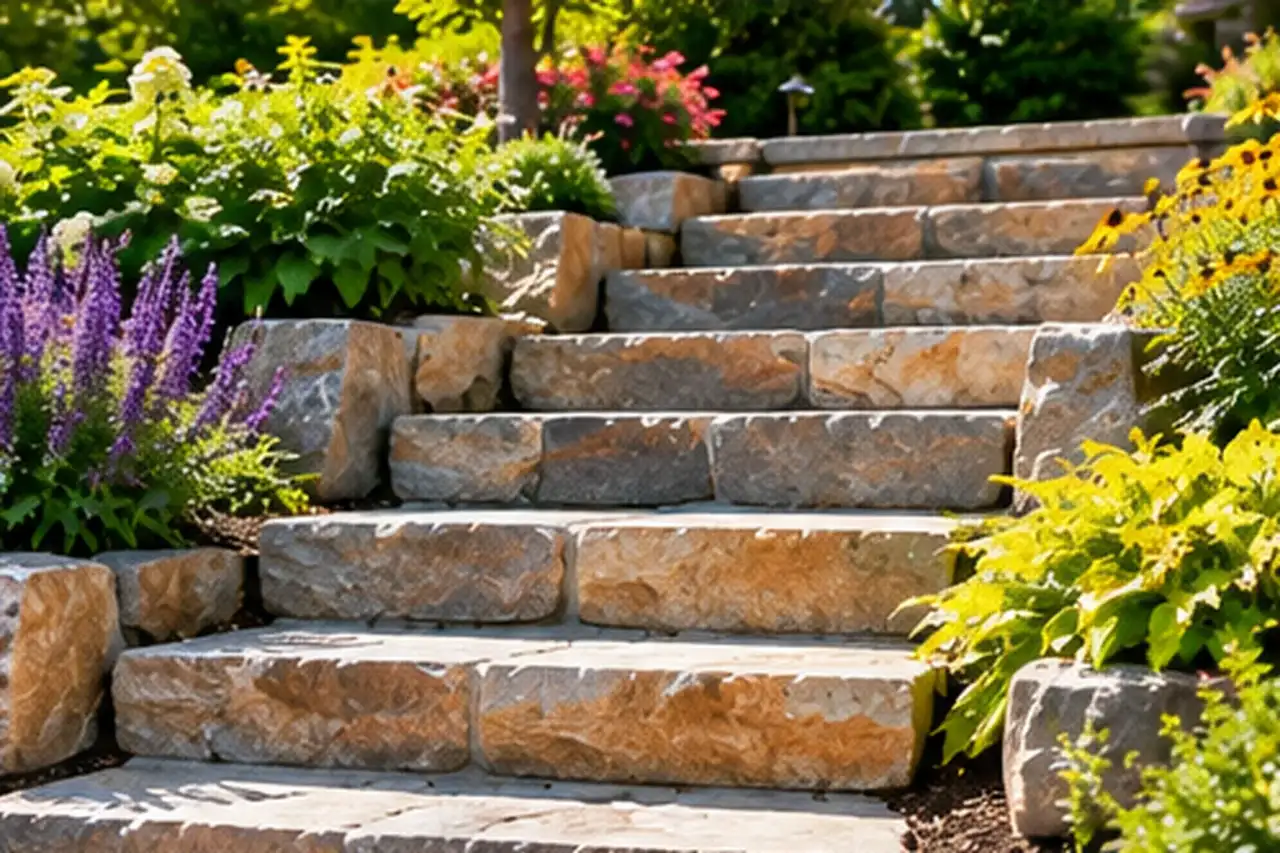
Steps and landings
Stone steps need treads that drain, a stable base and a surface that suits the stone and how it will be used.
Facades and wall cladding, where stone is applied to the outside of a house or a feature wall as veneer.
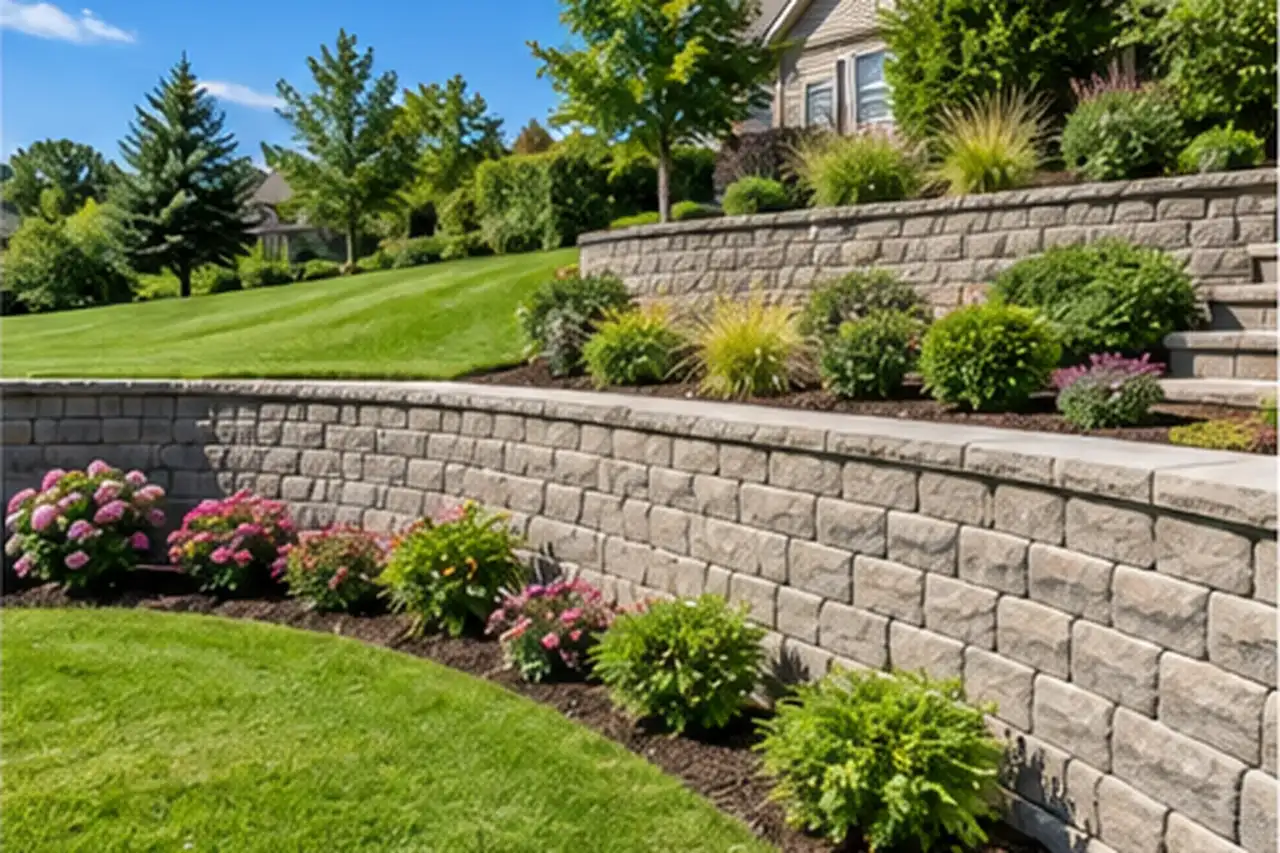
Walls that hold back soil are a different structure entirely, with drainage and engineering questions of their own. Those are covered on our retaining walls page, whatever material they're built from.
If you're planning a freestanding stone wall in Salt Lake City, note that the city's fence ordinance requires a permit for masonry walls, with construction plans showing the foundation and reinforcement (SLC fence ordinance). Other cities in the area have their own rules.
Dry Stack and Mortared Stonework
These are two different ways of building with stone, and they shouldn't be treated as interchangeable.
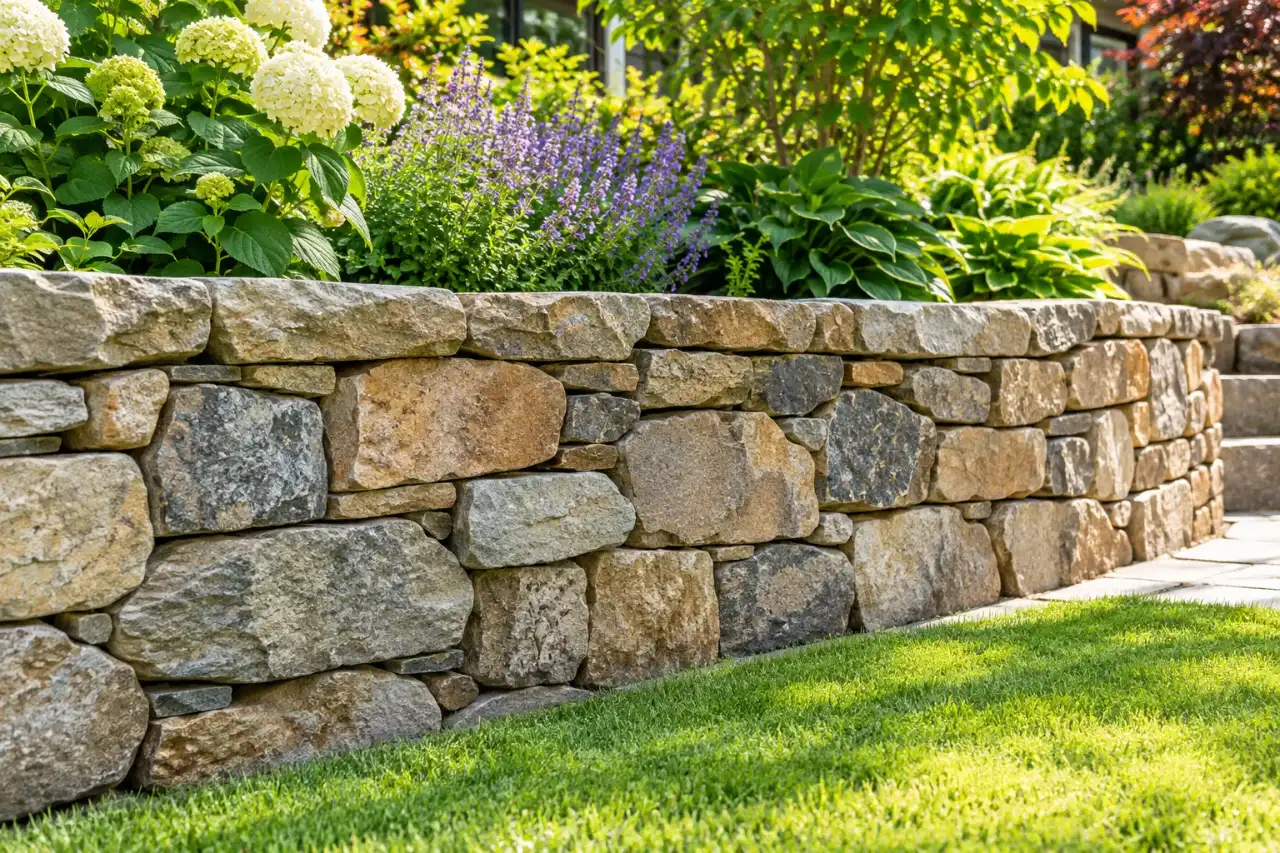
Dry stone walls are built without mortar. They stay standing through the weight of the stone, the friction between stones, and careful construction: stones are placed so they interlock, the core is packed with smaller stones called hearting, and long through stones span the wall to tie its two faces together. The Stone Trust's guidance on building dry stone walls explains these principles, and how well a dry stone wall performs depends heavily on the stone and the skill of the builder.
Mortared stonework bonds the stones together with mortar and typically sits on a footing. It produces a more rigid wall and allows forms, such as columns and tall or thin walls, that dry stone doesn't suit.
One point of confusion: "dry stack" is also used to describe stone veneer laid with tight joints and no visible mortar. That look is created with an adhered system that still relies on mortar behind the stone, so it is a veneer, not a dry stone wall.
Neither approach is simply stronger or longer lasting in every situation. The right choice depends on the purpose, the stone, the height and the site.
Natural Stone Versus Manufactured Stone Veneer
Homeowners choosing a stone look for a house or feature wall usually compare natural stone with manufactured stone veneer.
Full depth natural stone
Full depth natural stone is laid as solid masonry. It's heavy, so it needs proper support, usually a footing or ledge designed for its weight, and it brings genuine variation in color and texture.
Natural stone veneer
Natural stone veneer uses real stone applied as a facing, with weight and support requirements that depend on how thick the stone is.
Adhered manufactured stone veneer
Adhered manufactured stone veneer is a lightweight, manufactured product made to resemble stone. It is applied as cladding and does not carry structural loads, according to the industry installation manual published by the Concrete Masonry and Hardscapes Association (CMHA installation guide).
The trade offs are specific to the products being compared. Weight affects what the wall behind must support. Appearance differs between natural variation and a manufactured profile. Maintenance and cleaning have to suit the actual material, since methods that are fine for one can damage another. There's no reliable blanket ranking of natural against manufactured stone on cost or durability; the stone, its thickness, the wall behind it and the quality of the installation all matter more than the category.
Get an Estimate
Photos and an address are the fastest way to a useful answer.
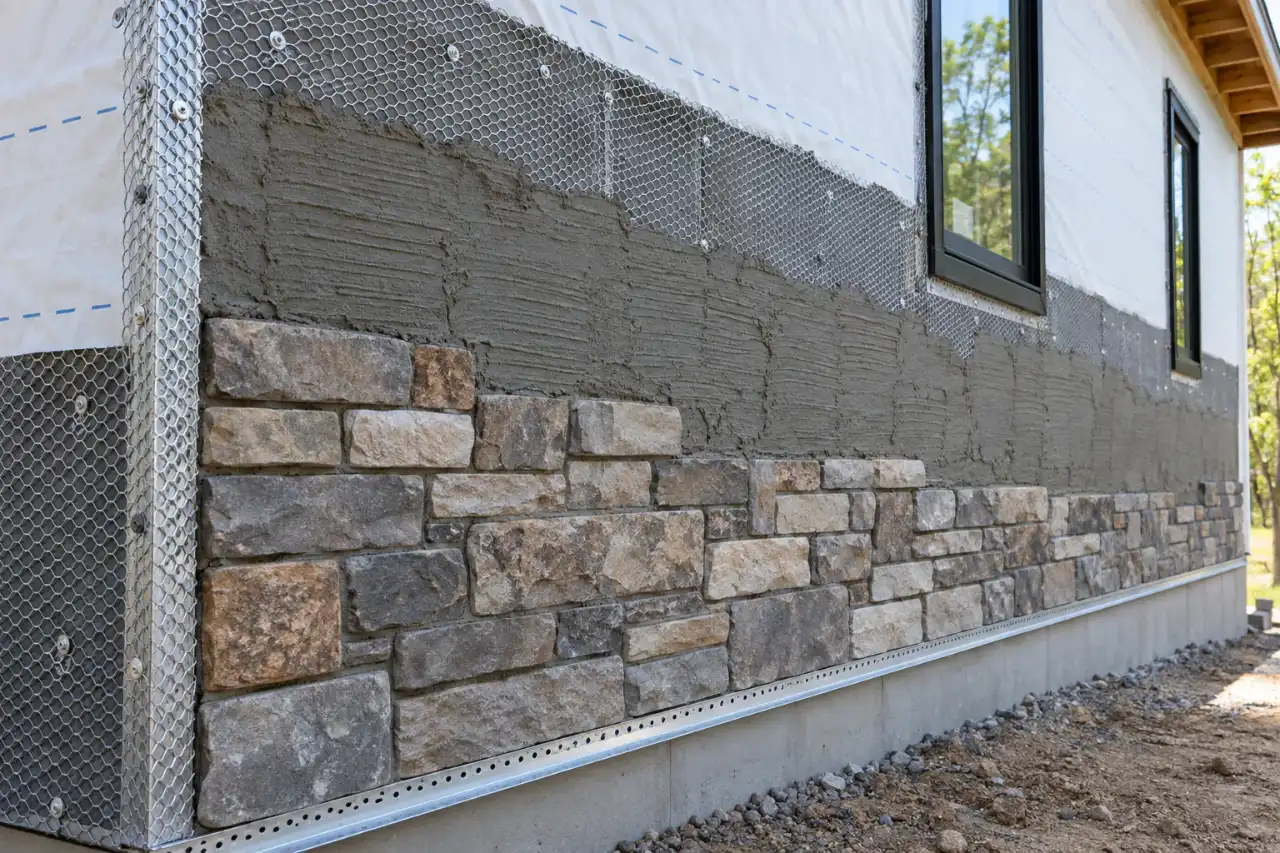
Stone veneer looks solid, but it isn't a waterproof skin. Some water will get behind it, and the wall needs a way to keep that water away from the structure and let it drain out. That's why veneer performance depends on the whole assembly, not just the stone on the face.
CMHA's installation guidance treats adhered stone veneer as an integrated system: the substrate it's applied to, the water resistive barrier, the lath, the mortar layers, the flashing, and the details where the veneer ends at windows, roofs and the ground. CMHA also notes that the choice of drainage or rainscreen detailing behind veneer should be coordinated with the applicable code and the manufacturer's instructions (CMHA: rainscreens and water resistive barriers).
When those details are missing or poorly made, water can stay trapped behind the stone, where it can damage the wall structure out of sight. The specific components and dimensions come from the adopted building code and the instructions for the product being installed, so they should be confirmed for each project rather than assumed.
Resetting and Repairing Loose Stone
Loose or fallen stones are among the most common stone repairs, on walls, steps, caps and veneer alike. Resetting a stone is straightforward; making the repair last means understanding why it came loose.
A proper assessment looks at:
On veneer in particular, stones that keep coming loose can point to problems behind the face, such as water getting in or a failing substrate. Resetting those stones without addressing the cause usually means doing it again. Where a stone has to be replaced, matching its type, color and size is part of the job. Damaged brick and block are covered on our masonry repair page.
✓
The stone itself, and whether it's cracked, spalled or sound enough to reuse.
✓
The setting material, meaning the mortar that held it, and whether it has failed in one spot or more widely.
✓
The assembly behind it, such as the wall core, the substrate behind veneer, or the base under a step.
✓
The moisture source, since water is often what loosened the stone in the first place.
How Stone Holds Up to Freeze Thaw
Salt Lake City's winters spend a lot of time around freezing, and stone is exposed to the same freeze thaw risk as other masonry. National Park Service guidance links retained moisture in masonry to damage during freezing (NPS Preservation Brief 1). How much that matters depends on three things:
The stone
Stones differ widely in geology, density and absorption, so they don't all perform alike. Material specific test data and track record matter more than general reputation.
Moisture exposure
Horizontal surfaces such as steps, caps and copings, and stone near or in contact with the ground, stay wet longer than vertical walls.
Installation
Caps that shed water, joints that stay sound, drainage behind veneer and a base that doesn't hold water all reduce how saturated the stone gets.
The same stone can last for generations in one installation and deteriorate in another, which is why material choice and construction details are decided together.
Often closely, though not always exactly. Natural stone varies from quarry to quarry and even within a single source, and older stone has weathered. Bringing a sample or a clear photo of the existing stone helps narrow the options.
Not as a rule. Coatings can trap moisture in some masonry, and whether one is appropriate depends on the stone and the reason for sealing it. Our masonry restoration page explains why sealers aren't a routine step.
Mostly, keeping water off it and checking it periodically: clear drainage, intact caps, and sound joints. Loose stones and open joints are easier to fix early.
Share what you'd like built or repaired, rough dimensions, photos of the area, and examples of stone you like. If you live in an HOA community, check its architectural review requirements early, since city approval and HOA approval are separate.