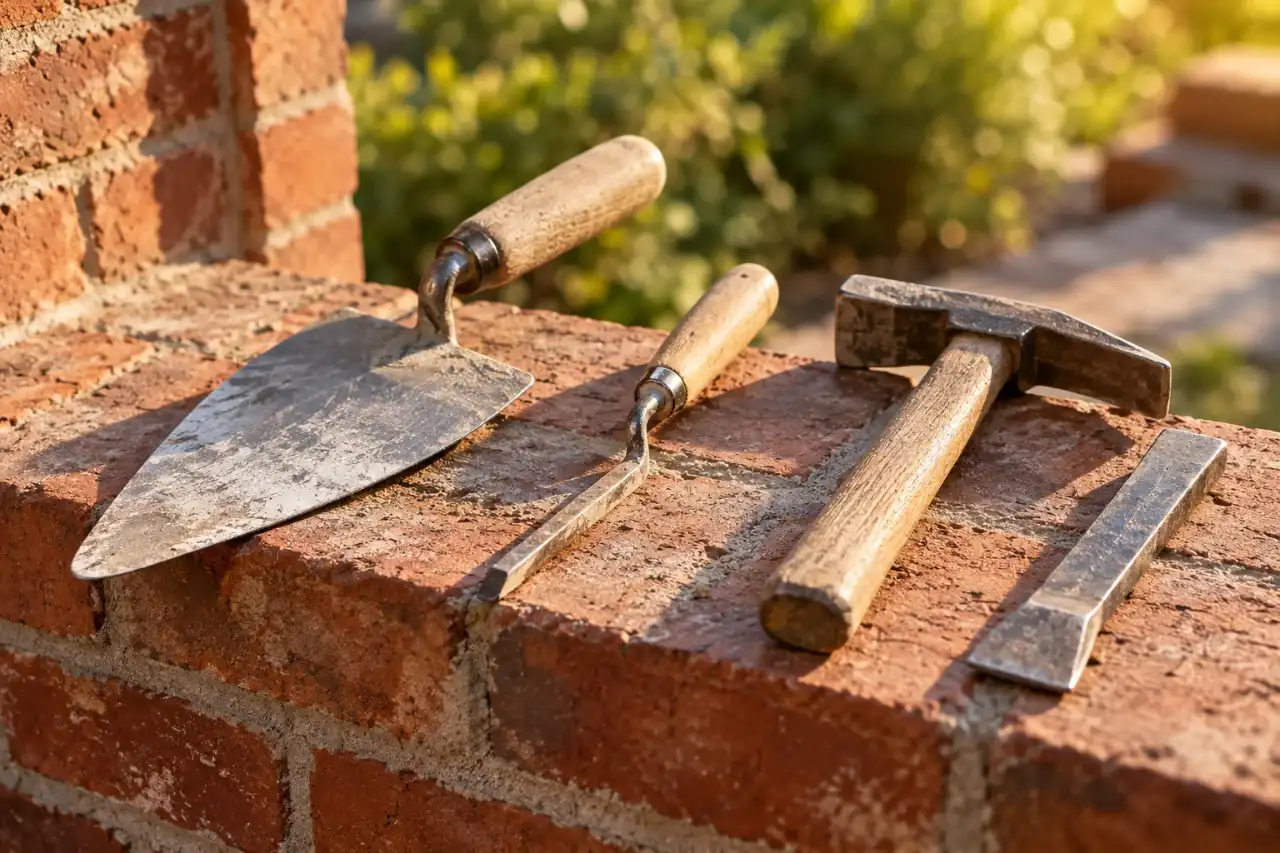
Brick, stone and block repair
Masonry & Brick Repair in Salt Lake City, UT
Cracks, flaking brick faces, loose units and crumbling steps rarely fix themselves, and patching the surface without finding the cause usually means doing the job twice. We repair brick, stone and block, starting with why it failed.
Signs Your Brick or Masonry Needs Repair
Most masonry problems announce themselves gradually. The common ones are easy to spot from the ground or a ladder:
Cracks, either running through the mortar joints or cutting straight through bricks and stones.
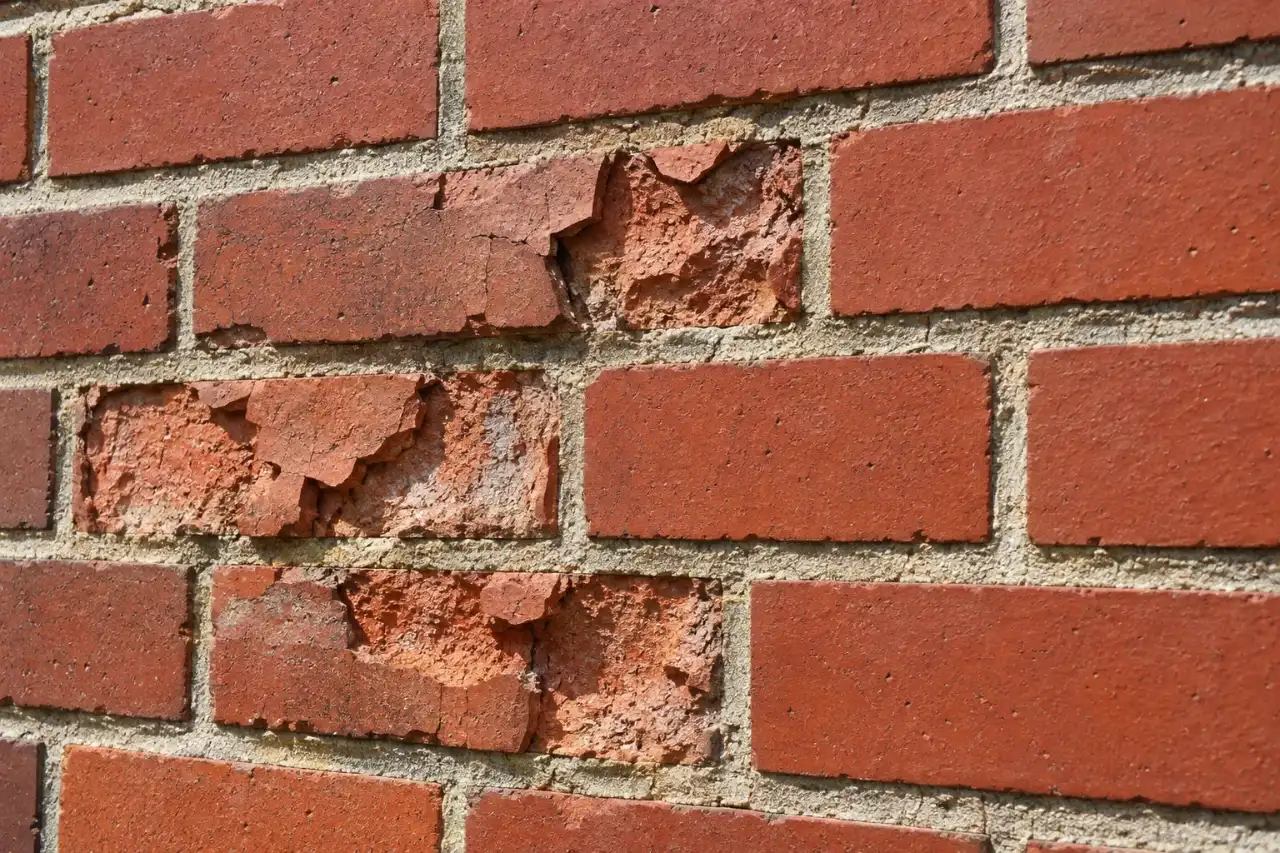
Spalling, where the face of a brick or stone flakes, peels or pops off, exposing the softer interior.
Bulging, where a section of wall pushes outward from the surface around it.
Leaning, when a wall, chimney, column or set of steps is no longer plumb.
Loose, broken or missing units, including bricks that rock when touched and stones that have come away from a step or cap.
Separation, such as a gap opening where a brick wall meets a porch, step or another wall.
What you can usefully report is where the damage is, roughly how large an area it covers, how long you've noticed it, and whether it has changed. Photos help: one wide shot that shows the whole wall and its surroundings, plus a few close ups. If you see water stains indoors near the same wall, mention that too.
Photos are a starting point, not a diagnosis. Brick Industry Association maintenance guidance describes inspection as combining the crack pattern with displacement, extent and the condition of nearby components (BIA Technical Note 46). Two cracks that look alike in a photo can come from different causes and call for different repairs.
What Causes Brick and Masonry to Deteriorate
Brick, stone and block are durable materials, but they are not indifferent to water, movement or time. Most damage traces back to one or more of the following, and a sound brick repair plan identifies which ones apply to your property.
01
Moisture and drainage
Water is involved in many forms of masonry deterioration. Gutters that overflow onto a wall, downspouts that empty against a foundation, soil graded toward the house, and open mortar joints all let water into masonry that should stay relatively dry. BIA maintenance guidance treats finding and correcting the moisture source as part of the repair, not a separate project. Replacing damaged brick while water keeps entering the same spot usually means repeating the work.
02
Freeze thaw exposure in Salt Lake City
Salt Lake City winters hover around freezing. NOAA's 1991 to 2020 climate normals for Salt Lake City International Airport show an average January high of 38.6°F and an average low of 24.2°F, with about 51.9 inches of snow a year (NOAA NCEI climate normals). When masonry holds water and that water freezes, it can damage the material from within. National Park Service guidance links retained moisture to damage during freezing, and BIA notes that durability depends on how saturated a material gets, not on temperature alone.
That makes saturation the key. A well drained wall in a cold winter may hold up for decades, while a wall that stays wet can deteriorate quickly in the same climate. Cold weather alone does not prove that freeze thaw caused a particular crack or spall.
03
Settlement and ground movement
Walls rest on soil, and soil can move. The Utah Geological Survey describes expansive soils, which swell and shrink as their moisture changes, and collapsible soils, which can settle when they get wet (UGS: Problem Soils). Either can stress masonry above. These are regional hazard types; whether they affect a specific wall takes investigation of that site.
04
Age, earlier repairs and embedded metal
Older masonry has simply had more seasons of exposure. Earlier repairs can also be part of the problem: BIA notes that repointing mortar much stronger than the surrounding historic brick can concentrate stress in the brick, contributing to cracked or spalled faces. Corroding steel lintels, ties or anchors embedded in a wall can expand and push masonry out of place as well.
Repairing Brick, Stone and Block
The word "masonry" covers several materials that behave differently, so a repair approach that suits one may be wrong for another.
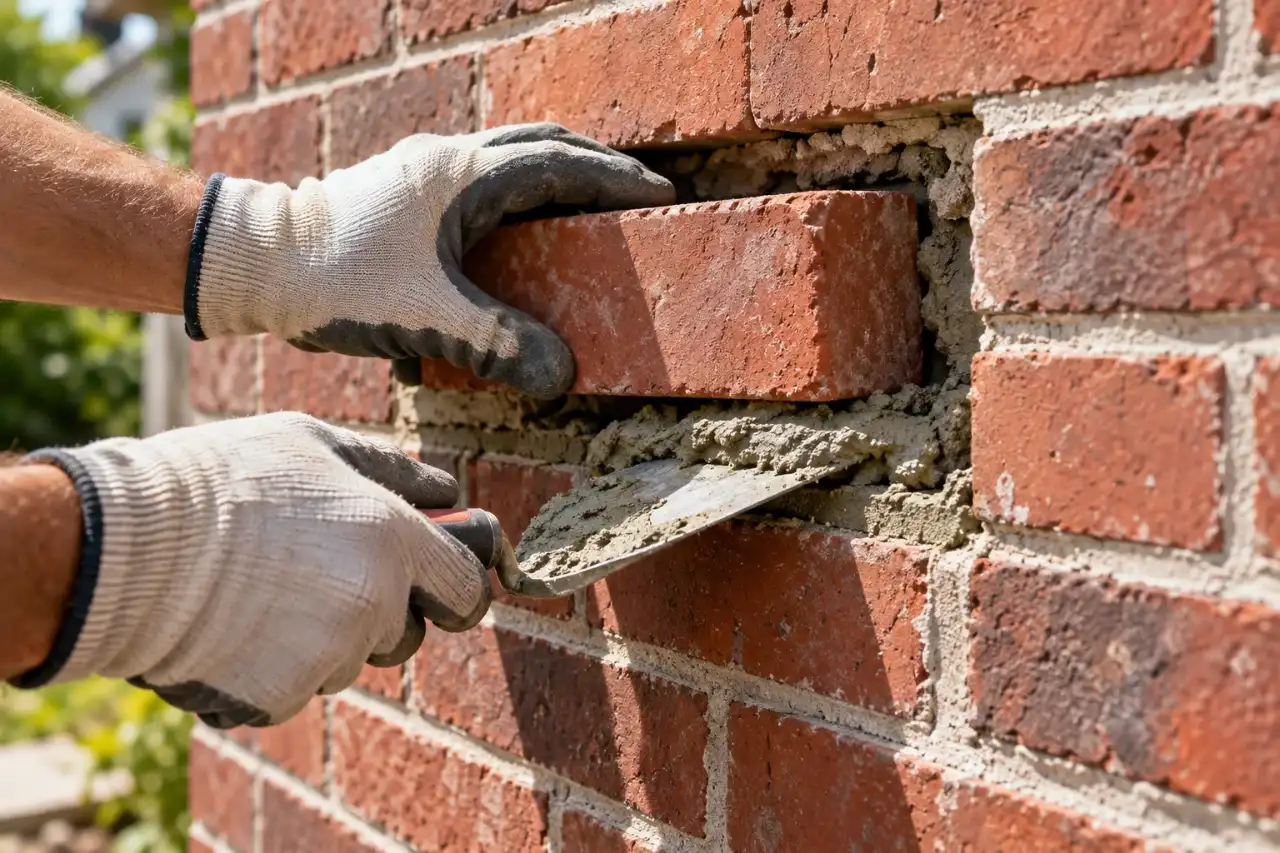
Brick repair usually centers on replacing damaged units, rebuilding small sections and making sure the mortar around them suits the existing wall. Brick walls on homes may be load bearing walls or a veneer tied back to a wood or block frame, and that difference affects how much can be removed safely at once.
Stone varies widely in hardness, shape and how it was set. Resetting a loose stone means looking at the setting bed and the assembly behind it, not just pushing the stone back into place. Larger stone projects and stone veneer are covered on our stone masonry page.
Concrete block walls are often structural, and concrete masonry tends to shrink over time while clay brick tends to grow slightly. BIA guidance on brick expansion explains that the two materials need different movement detailing, so cracks where brick and block meet can reflect that mismatch rather than a failing wall.
Scope varies just as much. One repair might mean replacing six bricks under a window; another might mean taking down and relaying the top courses of a garden wall. The right scope depends on what the assessment finds.
Replacing Damaged Brick and Matching Older Brickwork
When individual bricks are cracked through, badly spalled or loose, brick replacement is usually the most direct fix. The damaged units are cut out, the opening is cleaned, and new or salvaged brick is set in fresh mortar. The challenge is making the repair look like it belongs.
Several factors determine how well a replacement matches:
Replacement units also have to suit the wall's exposure. Salt Lake City's residential design criteria classify the area for severe weathering (SLC Design Criteria), and BIA's brick classifications include a grade intended for severe weathering exposure. A brick that looks right but is poorly suited to freezing conditions is not a good match.
No replacement is invisible on day one. A careful match should blend in from normal viewing distance and continue to weather alongside the original. If your home is in a locally designated historic district, the city's preservation guidance favors replacement brick similar in size and color to the original, and some exterior work requires approval. Our masonry restoration page covers that process.
✓
Size
Brick dimensions have changed over the decades, and a brick's actual size differs from its nominal size. BIA's dimensioning guidance explains these differences, which is why existing brick and joints should be measured rather than assumed to be standard (BIA Technical Note 10).
✓
Color and texture
Brick from the same era can vary noticeably, and decades of weathering change the face of a wall.
✓
Availability
Some older brick is no longer made. Salvaged brick or the closest current product may be the realistic choice.
✓
Mortar
Mortar color, sand and joint profile affect the overall appearance almost as much as the brick itself.
Get an Estimate
Photos and an address are the fastest way to a useful answer.
What Stair Step Cracks in Brick Can Mean
A stair step crack zigzags diagonally through the mortar joints, following the brick pattern up or down a wall. It's one of the most common cracks homeowners ask about, and it can come from several sources: differential settlement of the foundation, movement as materials expand and contract, or restraint where one part of a building moves and another doesn't. BIA's guidance on volume changes illustrates how each of these can produce diagonal cracking (BIA Technical Note 18).
The pattern alone doesn't say whether the crack is cosmetic or structural. These accompanying signs deserve closer attention:
A simple way to track a crack is to photograph it with a ruler or coin in the frame and date each photo. That record is more useful to an assessor than a single snapshot. There is no single crack width that proves a wall is safe or unsafe, so a crack that is changing should be evaluated rather than filled and forgotten.
✓
The crack is noticeably wider at one end than the other.
✓
The brick on one side of the crack sits out of plane with the brick on the other.
✓
The crack runs through bricks, not only through mortar.
✓
It reopens after being repaired, or you can see it growing over months.
✓
Doors or windows nearby have started to stick or show gaps.
When a Structural Assessment Makes Sense
Some masonry damage goes beyond replacing units or repointing joints. Bulging walls, walls or chimneys that lean, sections separating from the rest of the structure, and cracks that keep widening all suggest movement that a repair alone may not stop. BIA maintenance guidance notes that structural concerns call for professional evaluation.
In those situations, an evaluation by a structural engineer may need to come before a repair plan. If the movement seems tied to the ground, a geotechnical investigation of the soil may also be part of the answer, since mapped soil hazards can't describe conditions beneath one particular wall.
Older brick homes deserve a separate note. The Utah Division of Emergency Management explains that unreinforced masonry buildings are particularly vulnerable in earthquakes, and that you can't confirm whether a building is unreinforced just by looking at the brick (Utah DEM: Unreinforced Masonry). Routine masonry repair does not change that seismic vulnerability. If earthquake performance is a concern for your home, that question belongs with an engineer.
Repairing Masonry Versus Rebuilding It
Homeowners often ask whether a damaged wall can be patched or needs to come down. The honest answer depends on what the assessment shows. The main factors are:
Localized repair, partial rebuilding and full replacement each have a place. Choosing between them before anyone has looked at the wall would be guesswork.
✓
Extent
Scattered damaged units in an otherwise sound wall usually point to localized repair. Widespread cracking, spalling or loose brick across a section may make rebuilding that section more practical.
✓
Movement
If a wall is still moving, replacing bricks treats the symptom. The cause has to be understood, and sometimes corrected, before any repair will last.
✓
What's behind the face
On brick veneer, the ties that connect the brick to the wall behind it matter. Corroded or missing ties can mean a section needs to be relaid.
✓
The cause
Drainage, roof runoff or a failed cap that soaked the wall needs fixing either way.
✓
Matching and cost
Piecemeal repairs over a badly deteriorated area can end up costing more than rebuilding it once, and can look patchy.
Masonry Step and Wall Repair
Steps and freestanding walls are some of the most exposed masonry on a property, and they take a beating from water, snow and daily use.
01
Brick and stone steps
Masonry steps commonly develop loose treads, cracked or missing joints, spalled edges and gaps where the steps meet the house. A step that rocks underfoot is a trip hazard and is worth repairing promptly. Because water pools on treads and soaks the units, steps are also exposed to freeze thaw damage. Repairs range from resetting individual treads to rebuilding steps whose base has settled.
02
Garden walls and other masonry walls
Before repairing a wall, it helps to know what kind of wall it is:
Freestanding or decorative walls, such as garden, privacy and fence walls, stand on their own and hold back nothing.
Load bearing walls are part of a building and carry weight from above, so their repair involves more caution.
Retaining walls hold back soil. They face soil and water pressure that other walls don't, and are covered on our retaining walls page.
If a freestanding wall needs to be rebuilt rather than repaired, permit rules can come into play. Salt Lake City requires a permit for masonry fence walls, with plans that show the foundation and reinforcement. If you'd like a new wall built rather than an old one repaired, see our brick masonry and bricklaying page.
What Affects the Cost of Masonry Repair
Every masonry repair is priced on its own scope, so a fair estimate depends on a few specifics:
Our estimates are free. Whoever you hire, Utah's Division of Consumer Protection recommends getting the work, materials, price and expected start and completion dates in writing before a home improvement project begins (Utah Consumer Protection: Home Improvement).
✓
Size of the affected area and how many units need replacing.
✓
Access, including height, scaffolding and whether landscaping, decks or utilities are in the way.
✓
Material matching, especially when older brick or stone must be sourced or salvaged.
✓
Demolition, if damaged sections have to be taken down before rebuilding.
✓
Structural assessment, when an engineer's evaluation is needed first.
✓
Underlying causes, such as drainage corrections, that should be dealt with alongside the masonry.
Masonry Repair Questions
Can masonry repair wait until spring?
Sometimes. A hairline crack that isn't changing can usually be monitored. Loose bricks or stones that could fall, unstable steps and damage that lets water into the house are better dealt with soon. Masonry can be done in cold weather, but below about 40°F it needs extra protection measures, so timing is part of the estimate conversation.
Can you replace just a few bricks?
Often, yes. If the surrounding wall is sound and a reasonable match is available, replacing a handful of damaged bricks is a common repair.
Is crumbling mortar a brick repair or a tuckpointing job?
If the bricks are sound but the joints are recessed, sandy or missing, that's mortar joint work, covered on our tuckpointing and repointing page. Many projects involve both.
What about damage on my chimney?
Chimneys have their own components and exposure, so we cover them separately on our chimney repair page.
What should I send before an estimate?
Your address or city, a wide photo of the affected wall, a few close ups, how long you've noticed the problem and whether it has changed. If the house is in a historic district, mention that too.
Related Services
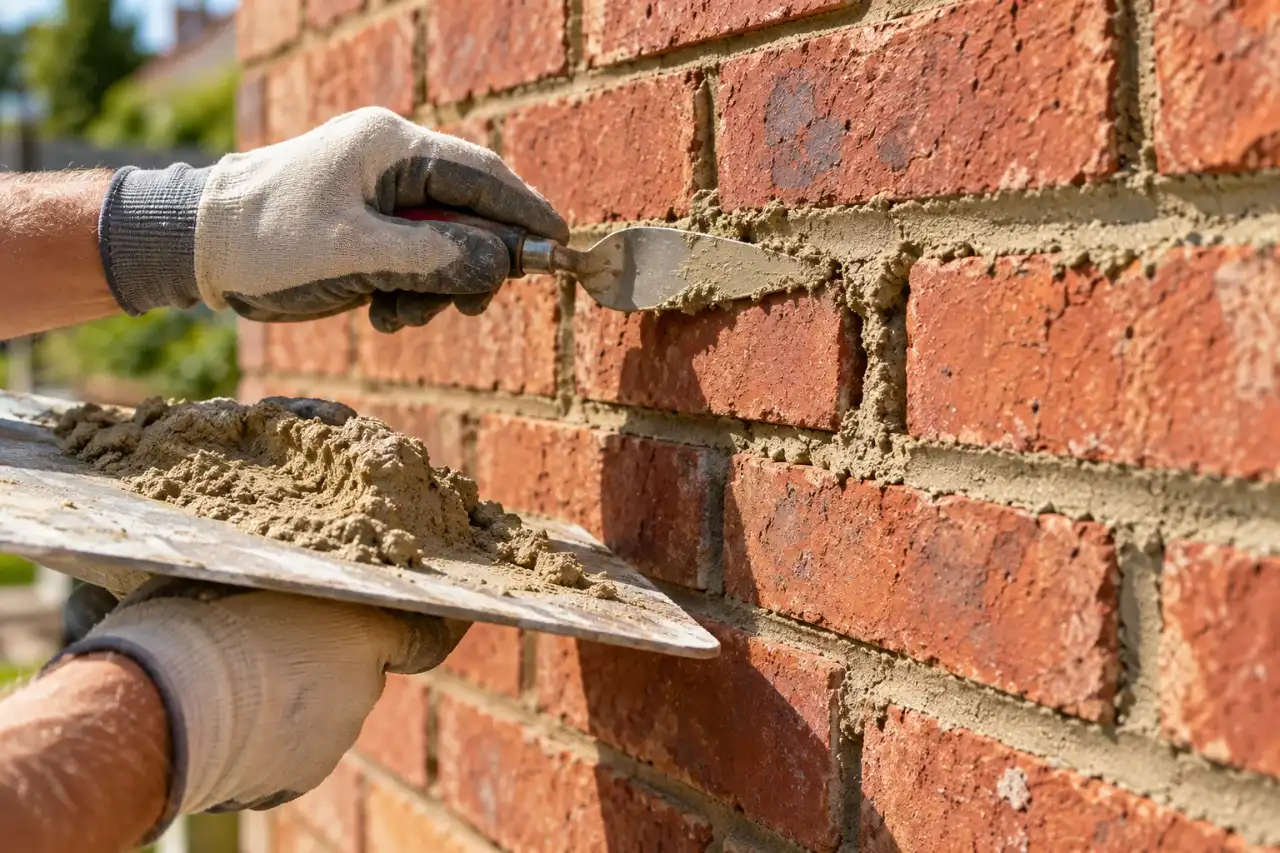
Worn mortar raked out and replaced with a mix that suits the age and hardness of your brick.
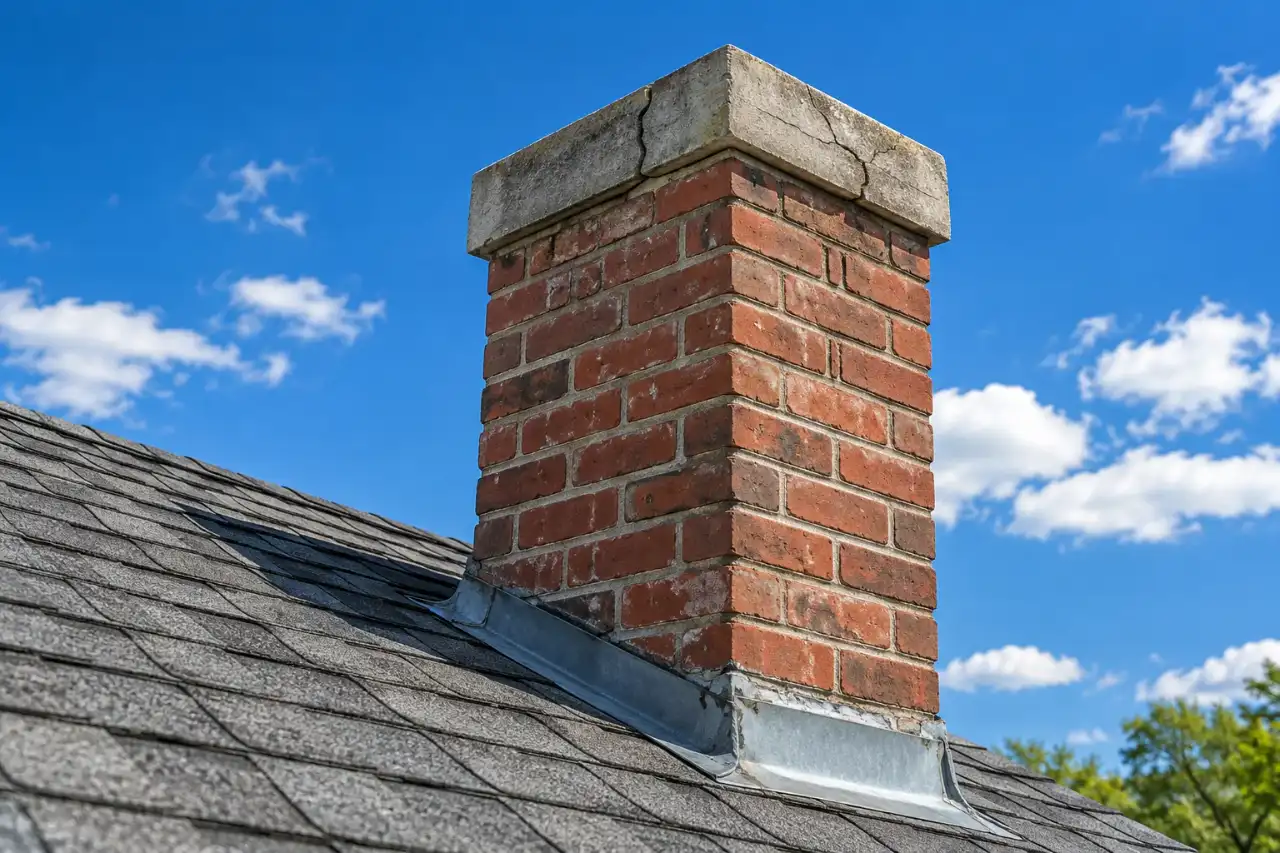
Crowns, joints and brick above the roofline, the part of the house winter hits hardest.
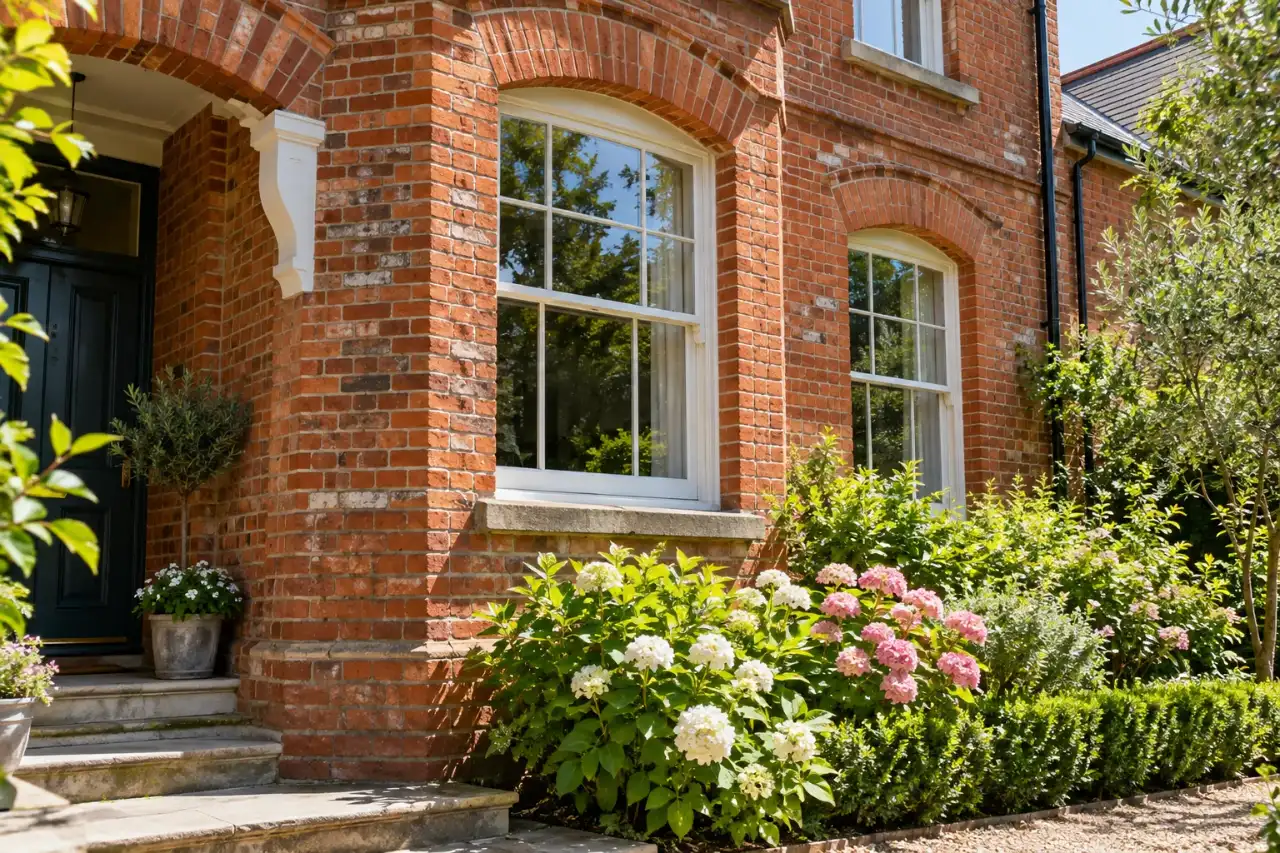
Careful work on older and historic brick and stone, where keeping original material matters.
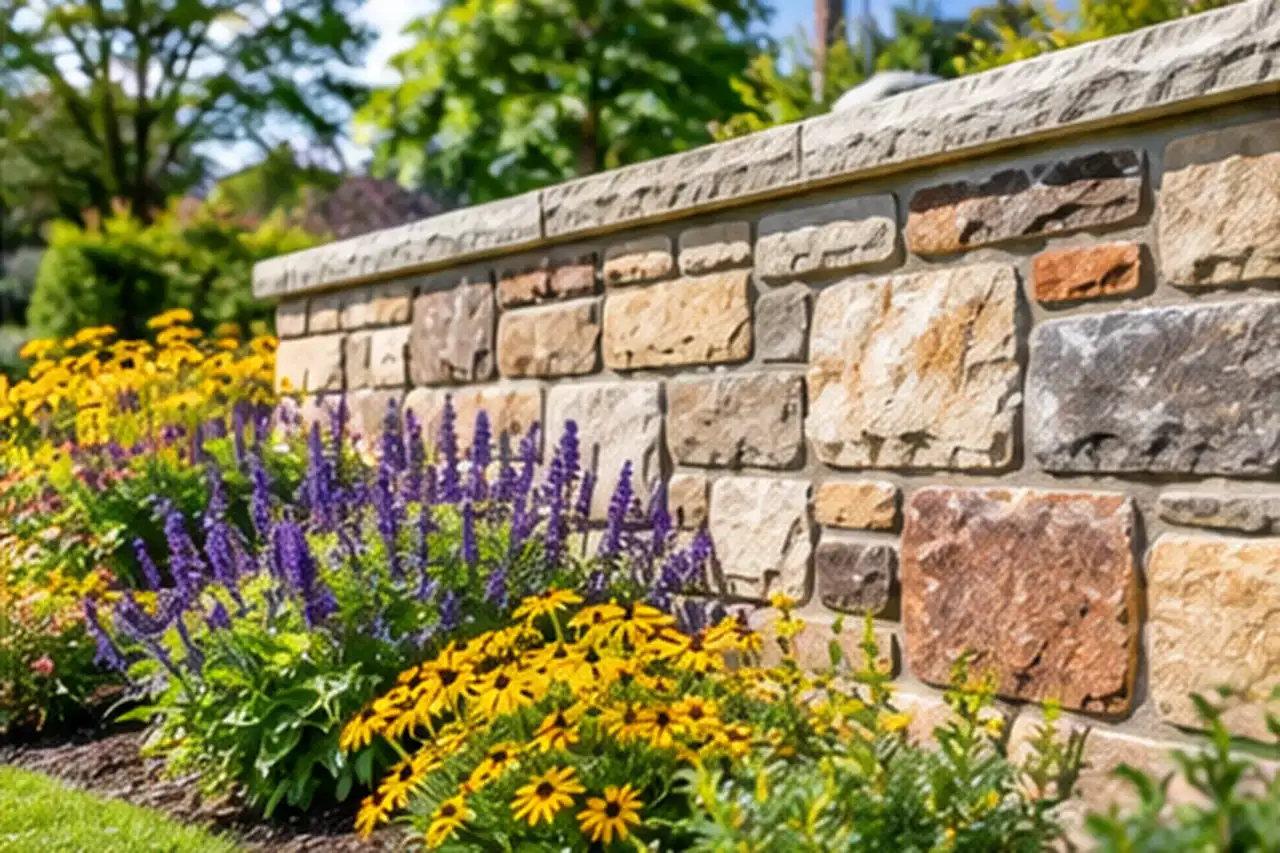
Natural stone walls, steps, columns and veneer, built new or reset when they shift.
Areas We Serve for Masonry & Brick Repair
Request a Masonry Repair Estimate
If you're seeing cracked, spalling or loose masonry, the sooner the cause is identified, the more repair options you usually have. Call Salt Lake City Masonry at (385) 516-8689, Monday to Saturday 8 AM to 9 PM and Sunday 10 AM to 3 PM, or request your free estimate online.