Mortar
Tuckpointing vs. Repointing: What's the Difference?
If your mortar joints are crumbling, you probably need repointing. Most people, and most contractors, call it tuckpointing. Here is why both words exist.
The short answer
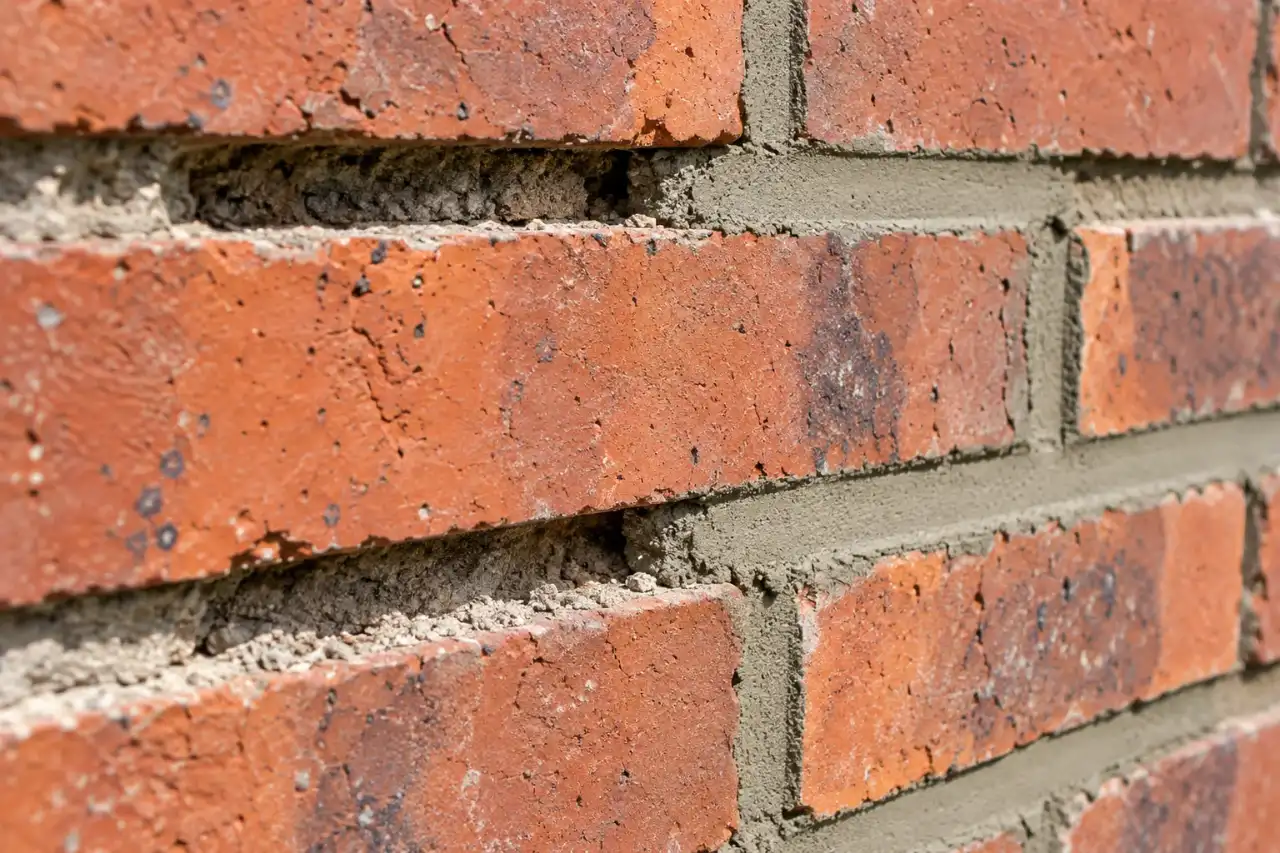
Repointing means removing deteriorated mortar from the joints between bricks or stones and replacing it with new mortar. That is the repair most homeowners need when joints are sandy, recessed or missing.
Tuckpointing, in its original sense, is a decorative technique. The National Park Service describes it as filling the joints with mortar matched to the brick, then adding a thin, contrasting line of mortar to make the joints look finer and more regular than they are (NPS Preservation Brief 2). Over time the word drifted, and in everyday use "tuckpointing" now usually means ordinary repointing.
Why the difference matters
For most homes, it does not matter which word you use as long as you and your contractor agree on the work. It matters more on older and historic buildings. If a house was originally tuckpointed, restoring that look is specialist work. If it was not, adding a contrasting line would change its appearance.
How repointing is done
1
Remove the old mortar
Joints are cleared to a sound depth. NPS guidance calls for a minimum of about two to two and a half times the joint width, and deeper where mortar is loose (Preservation Brief 2). Shallow removal is the most common shortcut, and new mortar on a thin skin tends to fall out.
2
Choose a compatible mortar
The new mortar should match the old in color and texture, and it should not be harder or less permeable than the brick around it.
3
Fill in layers
Deep joints are filled in layers, each one allowed to firm up before the next.
4
Tool and cure
The joint is tooled to match the original profile and protected while it cures, with extra steps in hot or cold weather (BIA Technical Note 1).
The mortar mistake to avoid
Harder is not better. When repointing mortar is stronger and less permeable than the brick, movement and moisture get pushed into the brick instead of the joint, and the brick faces can crack or spall (BIA Technical Note 8B). Mortar is meant to be the part of the wall that wears out and gets replaced. On older brick that usually means a softer, lime rich mix chosen after looking at what is already there.
Can you do it yourself?
A few small joints on a garden wall, maybe. Larger areas, chimneys, and anything on an older home are harder than they look. The removal is slow, matching color takes test panels that have cured, and the wrong mix does lasting damage. If the joints are failing across a whole wall, our tuckpointing and repointing page explains what a full job involves.
Related Services
Frequently Asked Questions
Mortar you can scrape out with a key, joints recessed well behind the brick face, cracks along the joints, or gaps where mortar has fallen out.
Yes. Tuck and point, tuckpointing and tuck pointing are all spellings of the same term.
Have a masonry question?
Send photos and your address, or call. Monday to Saturday 8 AM to 9 PM, Sunday 10 AM to 3 PM.