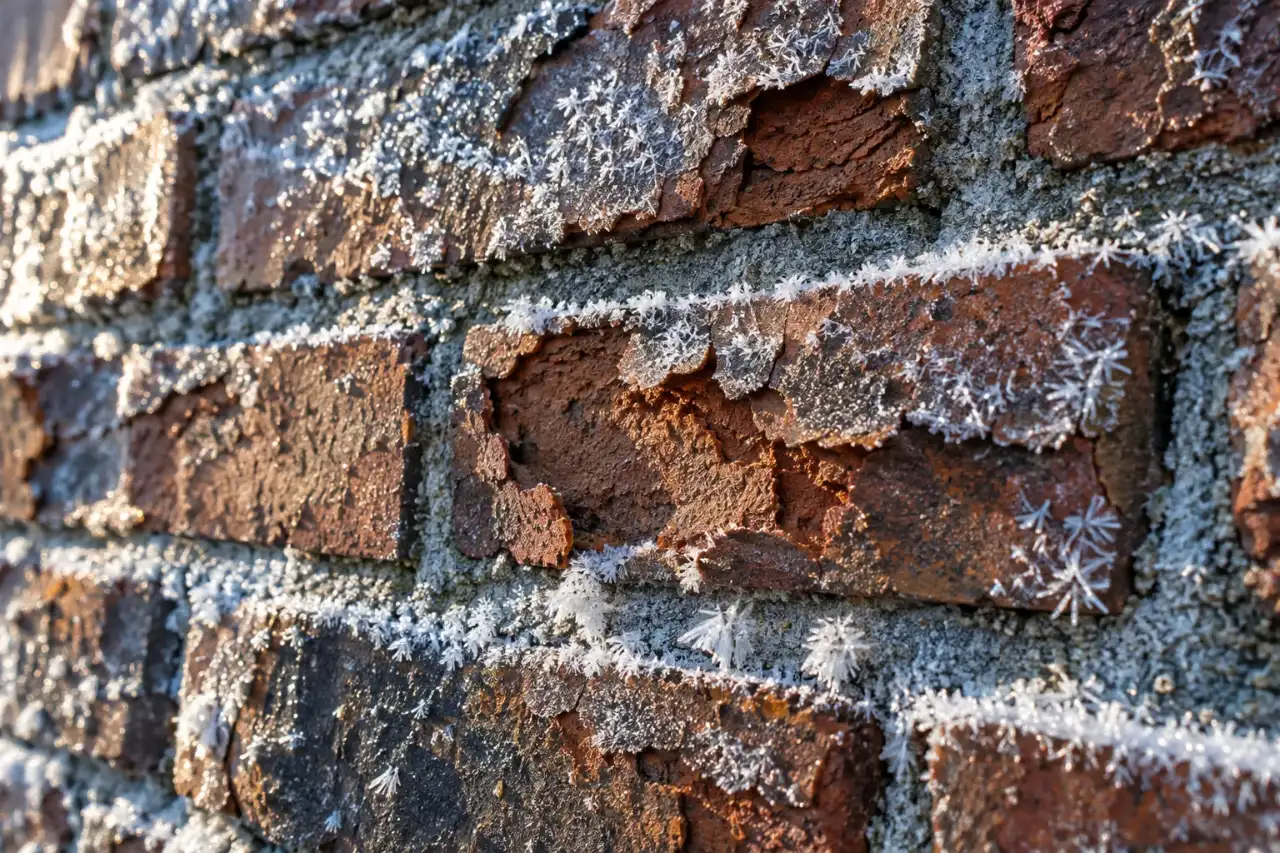
How Utah's Freeze Thaw Cycles Damage Brick, Stone and Mortar
Salt Lake City winters are cold enough to freeze water held in masonry, and that is where most of the damage starts.
Water does the damage, not cold
Brick, stone and mortar are porous. They take on water from rain, snow, sprinklers and wet soil. When saturated masonry freezes, that water expands inside the material. The Brick Industry Association explains that how well brick holds up depends on how saturated it is when it freezes, not on temperature alone (BIA Technical Note 9B). The National Park Service makes the same point for historic masonry: moisture retained in the wall is what makes freezing harmful (Preservation Brief 1).
So a dry wall can sit through a hard freeze without trouble, while the same wall below a leaking gutter starts to flake.
What Salt Lake City winters look like
At Salt Lake City International Airport, the 1991 to 2020 climate normals show January averaging a high of 38.6°F and a low of 24.2°F, with about 51.9 inches of snow a year (NOAA climate normals). Days that climb above freezing and nights that drop below it are common through winter.
Two cautions. Those are airport averages; benches and canyon mouths can differ. And we have not found a published count of freeze thaw cycles for masonry in Salt Lake City, so be wary of anyone quoting one.
What the damage looks like
Spalling
Brick or stone faces that flake, pop off or crumble. Water is often involved, though not always the only cause (BIA Technical Note 46).
Eroded mortar
Joints that turn sandy or recede. Mortar usually fails before brick does, which is how it is meant to work.
Cracked caps and crowns
Wall caps and chimney crowns sit flat and take standing water and snow, so they crack early.
White deposits
Efflorescence is salt carried to the surface by water (BIA Technical Note 23A). It is a sign of moisture moving through the wall.
A spring checklist
Walk the house and look at chimneys, wall tops, steps and anywhere a downspout empties
Look for new flaking, fallen mortar, or white staining that was not there in fall
Check that gutters and downspouts drain away from walls
Aim sprinklers away from brick and stone
Check that soil and paving slope away from the foundation
Look at retaining walls for bulging or new cracks after the thaw
The National Park Service suggests a regular inspection routine for exteriors, plus a check after major storms (Preservation Brief 47).
What not to do
Do not reach for a sealer as the first fix. Coatings can slow how fast masonry dries, and BIA notes that clear coatings are often unnecessary (BIA Technical Note 6A). Fix the water source first. And avoid pressure washing old brick, which can erode the surface (NPS Preservation Brief 6).
If the damage is already there, our masonry and brick repair page covers what a lasting repair involves, and tuckpointing covers failing mortar.
Sometimes, with protection. BIA lists cold weather measures that apply below 40°F (Technical Note 1). Many repairs are easier to schedule in milder weather.
Have a masonry question?
Send photos and your address, or call. Monday to Saturday 8 AM to 9 PM, Sunday 10 AM to 3 PM.