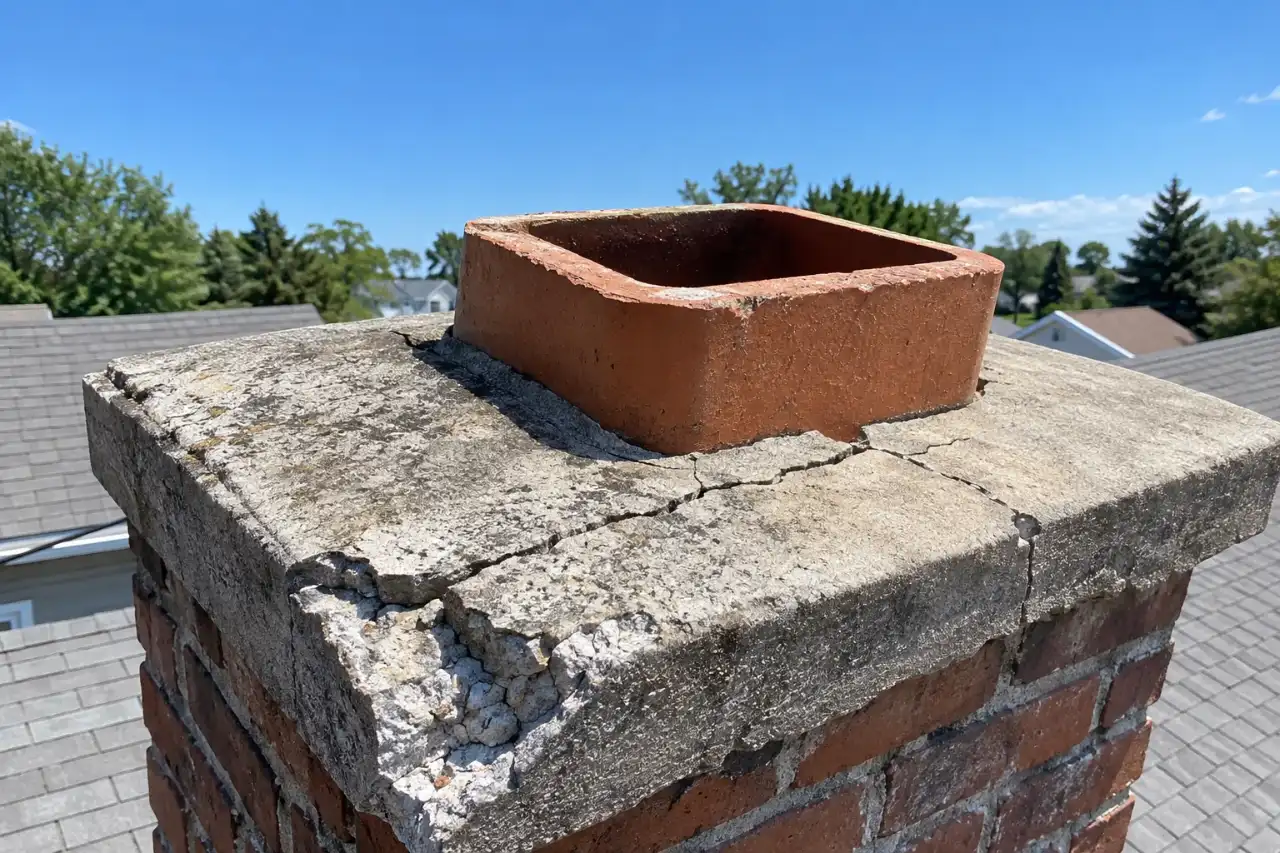
The crown is the slab on top of a masonry chimney. It is small, flat and fully exposed, which is why it is often the first part to fail.
Crown or cap?
People use the words loosely. In this article, the crown is the masonry or concrete slab that covers the top of the chimney around the flue. A rain cap is the removable metal cover that sits over the flue opening. Some people search for "fireplace crown repair"; they usually mean the chimney crown.
The crown's job is to shed water away from the brick below. The 2021 International Residential Code, which Utah has adopted for homes (Utah Code), says chimney caps should be made of durable materials, sloped to drain, and given a drip edge so water falls clear of the chimney face (IRC Chapter 10).
Signs the crown is failing
Visible cracks
Hairline or wider cracks across the top. Water gets in, freezes and widens them.
Crumbling edges
Corners and edges breaking away, sometimes leaving debris on the roof.
Water stains inside
Damp patches on the ceiling or wall near the chimney, or water in the firebox.
Damage to the brick below
Spalling or eroded mortar on the upper courses of the chimney, often the result of a crown that no longer sheds water.
Patch, rebuild or replace
Small surface cracks on an otherwise sound crown can sometimes be sealed. That buys time; it does not change the shape of a crown that was built flat or without an overhang.
A crown that is broken through, crumbling, or never had a slope or drip edge usually needs to be rebuilt. If the brick under it is also damaged, that work should happen at the same time. Our chimney repair page covers the full job.
What a crown repair does not cover
Crown work is masonry. Sweeping and flue inspection are separate tasks; the Chimney Safety Institute of America treats a flue inspection and sweeping as their own steps (CSIA).
Crown repair is also not earthquake strengthening. FEMA notes that ordinary chimney repairs do little for seismic performance (FEMA advisory). If that concerns you, talk to a structural engineer.
How often to check it
Look at the chimney from the ground with binoculars each spring and fall, and after big windstorms. The National Park Service includes chimneys and caps in its routine exterior inspection checklist (Preservation Brief 47). Do not climb onto a snowy or steep roof to look.